

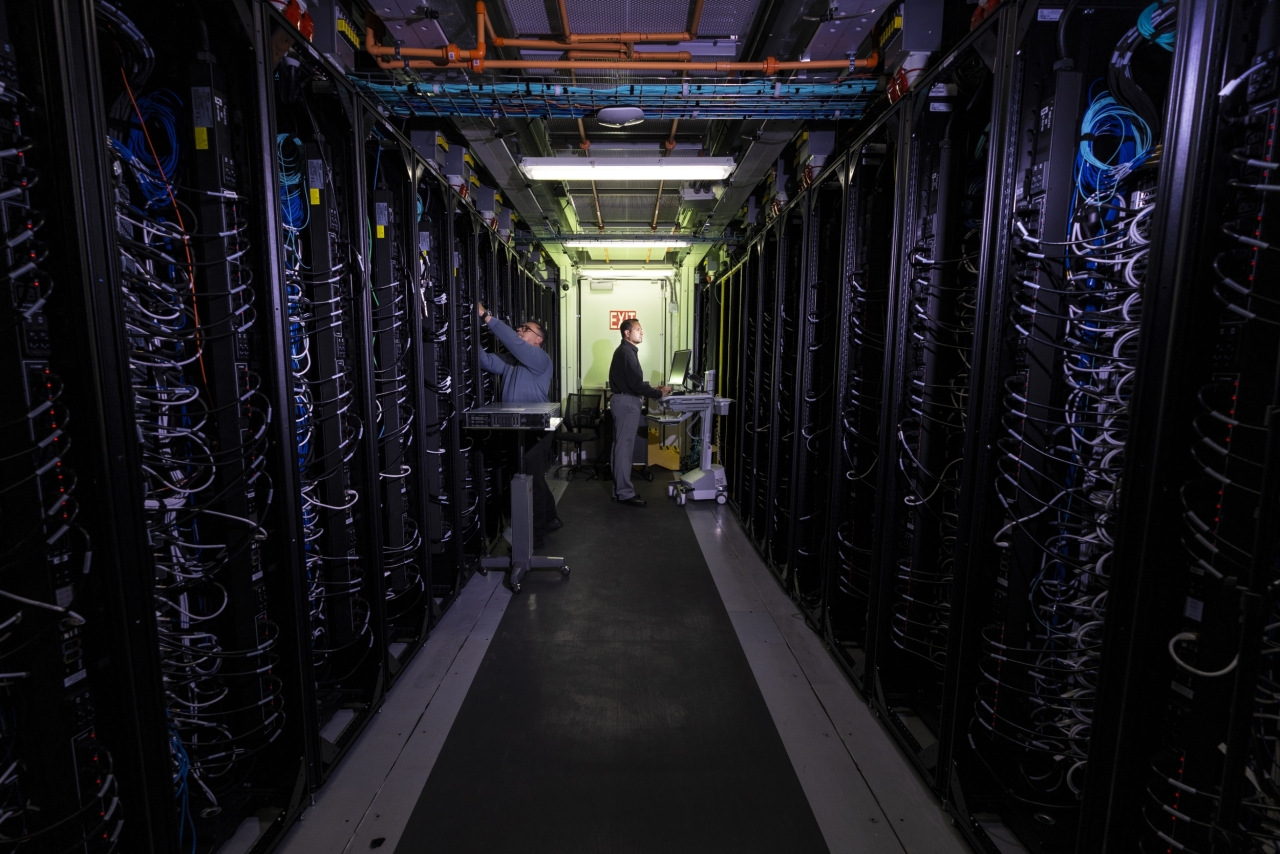

The rapid expansion of artificial intelligence has significantly increased demand for computing infrastructure, particularly large-scale data centers. These facilities now power everything from generative AI systems to cloud services and scientific computing. However, recent technological advances in AI efficiency are beginning to offset some of the associated energy costs by making both training and inference more computationally efficient.
AI model compression and low-bit inference reduce compute demand
One of the most impactful developments in AI efficiency is the move toward model compression and reduced numerical precision. Traditional AI models often rely on 16-bit or 32-bit computations, which require substantial processing power and energy. New research and commercial implementations are increasingly shifting toward low-bit representations, including 8-bit and even 1-bit models.
A recent example is a 1-bit precision AI architecture that dramatically reduces memory usage and energy consumption while maintaining performance levels comparable to larger models. According to recent findings, such compressed models can reduce energy usage by up to 80% and significantly decrease memory requirements, allowing faster and more efficient inference in data centers.
This trend reflects a broader industry movement toward quantization and compression techniques that reduce the computational burden of AI workloads without sacrificing accuracy in many applications.
Hardware-level improvements in AI accelerators
Alongside algorithmic improvements, hardware innovation is also driving efficiency gains. Next-generation AI accelerators, such as NVIDIA’s Blackwell architecture, are designed specifically to improve performance per watt in data center environments.
These systems incorporate optimized tensor processing units and inference engines that can significantly reduce energy consumption per computation. For example, NVIDIA reports that its latest architectures can reduce energy use for AI inference workloads by up to 25 times compared to previous generations in certain configurations.
In addition, software-controlled power management features allow data centers to dynamically adjust performance levels based on workload demand. This can improve energy efficiency by around 15% while maintaining most of the system’s computational throughput.
AI systems improving data center operations
Beyond accelerating AI workloads, machine learning is also being used to optimize data center operations themselves. One of the earliest and most well-known examples comes from Google DeepMind, which applied AI models to optimize cooling systems in its data centers.
By analyzing historical sensor data such as temperature, power usage, and cooling system performance, the AI system was able to reduce cooling energy consumption by up to 40%.
This demonstrated how AI can be used not only as a workload but also as a management tool to reduce inefficiencies in physical infrastructure.
More recently, similar approaches have been extended to workload balancing, predictive maintenance, and real-time power optimization across hyperscale cloud environments.
Cooling innovations and infrastructure efficiency
Cooling remains one of the largest sources of energy consumption in data centers. As AI workloads increase power density inside server racks, traditional air-cooling systems are reaching physical and economic limits.
To address this, companies are increasingly adopting advanced cooling techniques such as liquid cooling and closed-loop systems. These approaches are more efficient at transferring heat away from high-density GPU clusters and can significantly reduce reliance on energy-intensive air conditioning systems.
Modern infrastructure designs are also integrating energy-aware scheduling and workload distribution, ensuring that compute resources are used more efficiently across global data center networks.
The broader impact on sustainability and scalability
Together, these advancements in AI model efficiency, hardware design, and operational optimization are helping reduce the energy footprint of modern data centers. While overall energy consumption in the industry continues to grow due to increasing demand, efficiency improvements are slowing that growth and improving the ratio of compute output to energy input.
Industry trends indicate that future progress will likely come from a combination of:
- More efficient AI model architectures
- Specialized low-power hardware accelerators
- AI-driven infrastructure management systems
- Improved cooling and energy distribution technologies
Conclusion
The evolution of AI efficiency is becoming a critical factor in managing the environmental and economic costs of large-scale computing. Rather than simply consuming more energy as it scales, modern AI systems are increasingly being designed to do more work per watt.
While demand for AI continues to rise, these innovations suggest that the industry is entering a phase where efficiency improvements are just as important as raw performance gains—helping to shape a more sustainable future for digital infrastructure.

