
Industrial manufacturing is undergoing one of the most significant transformations since the introduction of the assembly line. Driven by advances in robotics, artificial intelligence, machine vision, and industrial IoT systems, factories are becoming increasingly automated, data-driven, and flexible. This shift is often described as part of Industry 4.0, where digital systems and physical production environments are deeply integrated.
- 1. The global expansion of industrial robotics
- 2. Robotics in automotive and electronics manufacturing
- 3. Collaborative robots (cobots) and human-robot interaction
- 4. Artificial intelligence and machine vision in manufacturing
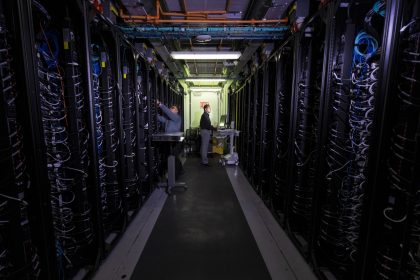
- 5. Industrial IoT and smart factories
- 6. Additive manufacturing and robotic production systems
- 7. Labor market impact and workforce transformation
- 8. Supply chain optimization and global manufacturing networks
- 9. Key challenges in industrial automation
Today, automation is no longer limited to repetitive tasks in controlled environments. Modern industrial robots can adapt to changing conditions, collaborate with human workers, and make real-time decisions based on sensor data and AI models.
1. The global expansion of industrial robotics
The adoption of industrial robots has been accelerating for more than a decade. According to the International Federation of Robotics (IFR), global installations of industrial robots reached record levels in recent years, with millions of operational units deployed worldwide, especially in automotive, electronics, and metal industries. IFR data consistently shows Asia—particularly China, Japan, and South Korea—as the largest adopter of industrial automation.
China alone has become the world’s largest market for industrial robots, accounting for a significant share of global installations, driven by large-scale manufacturing and national automation strategies. (ifr.org)
This rapid expansion reflects a broader industrial strategy: increasing productivity while addressing labor shortages and rising production complexity.
2. Robotics in automotive and electronics manufacturing
Two of the most automated industries globally are automotive manufacturing and consumer electronics production.
Automotive industry
In automotive plants, robots are widely used for:
- Welding and assembly of car bodies
- Painting and coating processes
- Precision installation of components
- Quality inspection using machine vision systems
Modern automotive factories can operate with thousands of robots working in coordinated systems, significantly increasing production speed and consistency while reducing defect rates.
Electronics manufacturing
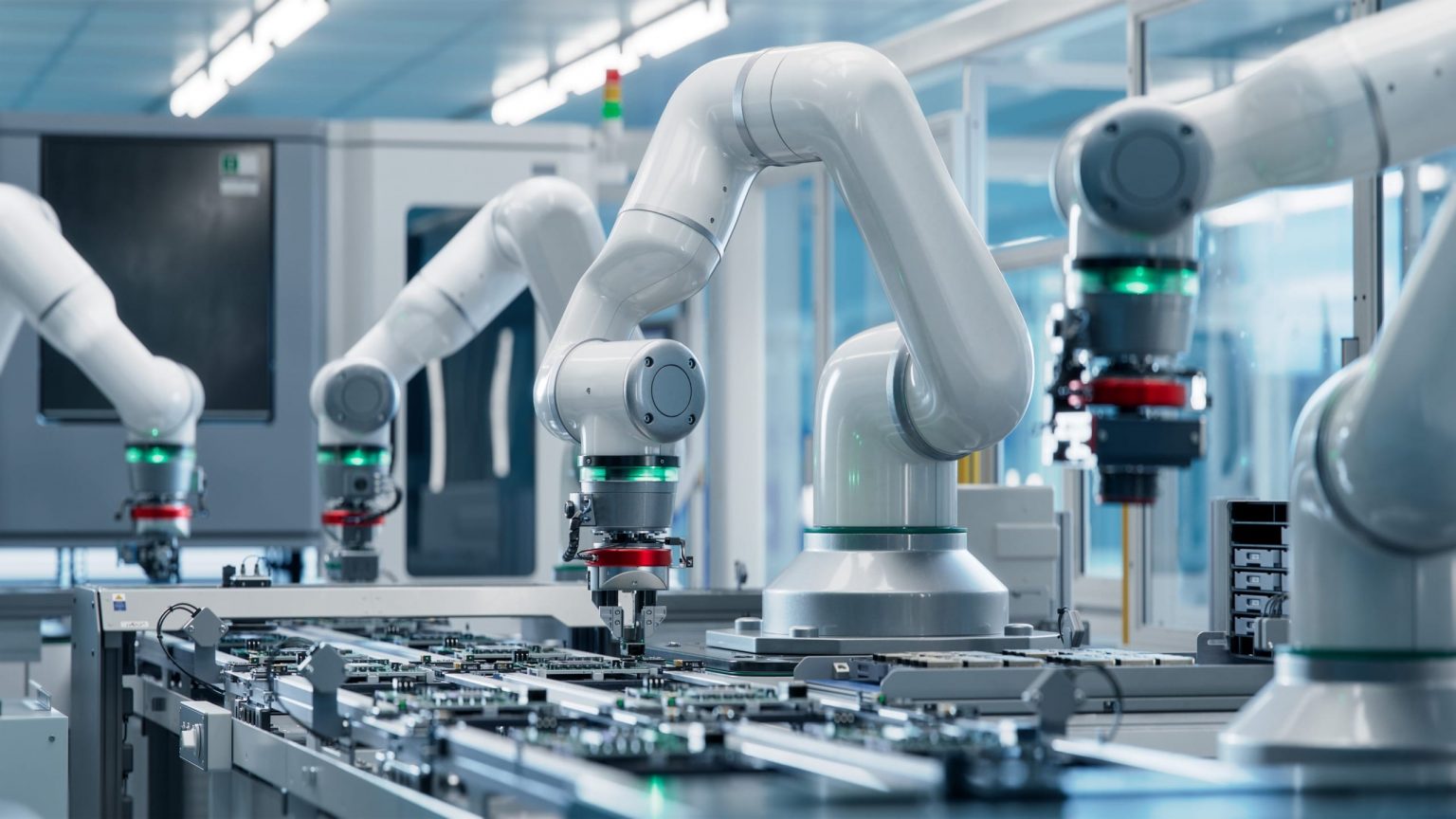
In electronics production, especially semiconductors and consumer devices, robotics is used for:
- Micro-precision assembly
- Chip handling and wafer processing
- Automated testing and calibration
The extreme precision required in semiconductor manufacturing makes automation essential, as human intervention would introduce unacceptable variability.
3. Collaborative robots (cobots) and human-robot interaction
One of the most important recent developments in industrial automation is the rise of collaborative robots, or cobots.
Unlike traditional industrial robots that operate in isolated safety zones, cobots are designed to work directly alongside human workers. They are equipped with:
- Force-limiting sensors for safety
- Computer vision systems for environment awareness
- Adaptive control systems for real-time adjustment
Cobots are increasingly used in tasks such as:
- Assembly assistance
- Packaging
- Machine tending
- Light manufacturing operations
This trend reflects a shift from full automation to hybrid human-robot collaboration, where machines handle repetitive or physically demanding tasks while humans focus on decision-making and complex operations.
4. Artificial intelligence and machine vision in manufacturing
AI is now a core component of modern industrial robotics systems. Machine learning and computer vision allow robots to:
- Identify defects in products with high accuracy
- Sort and classify materials in real time
- Adapt to variations in production lines
- Optimize movement paths for efficiency
AI-powered vision systems are widely used in quality control, where they can detect microscopic defects that may be difficult or impossible for human inspectors to consistently identify.
This shift toward intelligent automation reduces waste, improves product quality, and increases production efficiency.
5. Industrial IoT and smart factories
The integration of robotics with the Industrial Internet of Things (IIoT) has enabled the development of “smart factories.”
In these environments, machines, sensors, and software systems are interconnected and continuously exchange data. This allows manufacturers to:
- Monitor production lines in real time
- Predict equipment failures before they occur (predictive maintenance)
- Optimize energy consumption
- Adjust production schedules dynamically
Predictive maintenance in particular has become a major efficiency driver, reducing unplanned downtime and extending the lifespan of industrial equipment.
6. Additive manufacturing and robotic production systems
Another important trend is the integration of robotics with additive manufacturing (3D printing).
Industrial-scale 3D printing is increasingly used for:
- Aerospace components
- Medical implants
- Automotive prototyping
- Custom industrial parts
Robotic arms are often used to handle, finish, or assemble 3D-printed components, creating hybrid production systems that combine traditional manufacturing with additive techniques.
This allows for greater design flexibility and faster prototyping cycles.
7. Labor market impact and workforce transformation
Automation is reshaping the industrial workforce rather than simply replacing it.
Key trends include:
- Reduction of manual repetitive labor roles
- Increased demand for robotics engineers and automation specialists
- Growth in maintenance and systems integration jobs
- Need for digital skills in manufacturing environments
While some routine jobs are being automated, new roles are emerging that focus on managing, programming, and maintaining robotic systems.
Governments and industries are increasingly investing in reskilling programs to support this transition.
8. Supply chain optimization and global manufacturing networks
Automation is also transforming global supply chains. With AI and robotics, manufacturers can:
- Increase production flexibility
- Reduce dependency on manual labor fluctuations
- Localize production closer to demand markets
- Improve logistics coordination through automation systems
The COVID-19 pandemic accelerated this trend, highlighting the importance of resilient and automated supply chains capable of adapting to disruptions.
9. Key challenges in industrial automation
Despite rapid progress, several challenges remain:
High initial investment costs
Advanced robotics systems require significant upfront capital, making adoption more difficult for small and medium-sized manufacturers.
Integration complexity
Combining legacy industrial systems with modern automation platforms can be technically challenging.
Cybersecurity risks
As factories become more connected, they also become more vulnerable to cyberattacks targeting industrial control systems.
Workforce transition
Adapting the workforce to new roles requires ongoing training and education programs.
Automation and robotics are fundamentally transforming industrial manufacturing by increasing efficiency, precision, and scalability. From automotive assembly lines to semiconductor fabrication and smart factories powered by AI and IoT, modern production systems are becoming increasingly autonomous and data-driven.
However, this transformation is not simply about replacing human labor. Instead, it represents a shift toward collaborative industrial ecosystems, where humans and machines work together to achieve higher productivity and flexibility than either could achieve alone.
As robotics technology continues to advance, manufacturing is expected to become even more intelligent, adaptive, and globally interconnected in the coming years.